
The Era of the “Single Feature” is Over
Think back to 2020. We had one app for taxis, another for food delivery, a third for banking, and yet another for restaurant reservations.
Fast forward to 2026. A user’s smartphone screen is the most expensive real estate in the world. People are tired of “icon clutter.” They don’t want to download a new app for a single action once a month. They want a Super-App—a single entry point where 90% of their daily tasks are solved.
If your product does only one thing, you are in the danger zone. If you are building an ecosystem, you own the user’s attention.
In the VRG Soft blog, we break down why transforming into a Super-App is becoming the primary survival and growth strategy for IT products.

The Anatomy of a Super-App: The Three Pillars of Consolidation
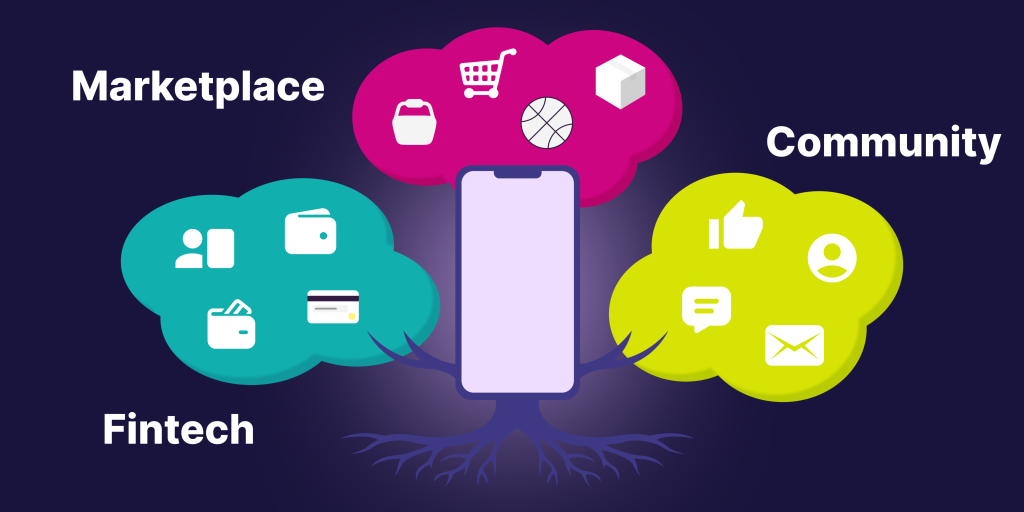
A Super-App isn’t just a “salad” of random features. It is a seamless integration of verticals that reinforce one another. Here is the classic triad that works today:
1. Fintech (Embedded Wallet)
Any app that involves transactions inevitably strives to become a fintech product. Integrating your own wallet or BNPL (Buy Now, Pay Later) mechanics does more than just save on acquiring costs. It binds the user to you. Paying “in one click” within your ecosystem is always easier than entering card details with a competitor.
2. Marketplace (Service Storefront)
Selling insurance? Offer clients clinic appointments and medication purchases right in the app. Have a fitness app? Add a shop for sports nutrition and gear. You turn the user from a “one-off visitor” into a recurring buyer of related services.
3. Social Mechanics (Community)
People come for utility, but they stay for other people. Chats, news feeds, and shared achievements within the app are what drive users to open the icon even when they don’t need to buy anything. This is free retention.
The Business Logic: Why Do You Need This?
Developing a Super-App is an investment. But here is what it delivers to the business in terms of numbers:
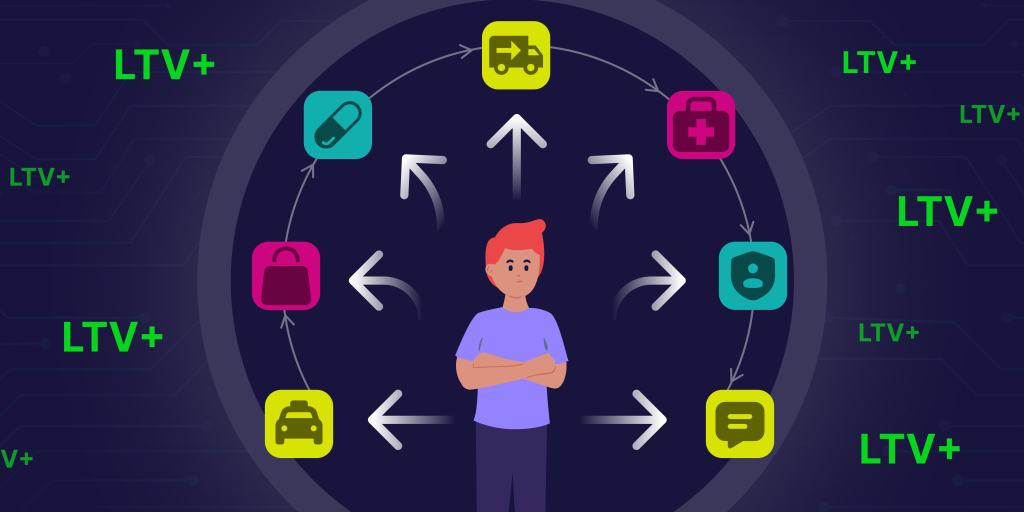
- Lower CAC (Customer Acquisition Cost): You acquire a user for one service (e.g., low-cost rideshare) and monetize them through another (e.g., high-margin insurance).
- LTV Growth (Lifetime Value): The more needs your app fulfills, the harder it is for a user to switch to a competitor. This is called “Vendor Lock-in.”
- Next-Level Data: You know not only where the client goes, but what they eat, how they pay, and who they talk to. This is the fuel for AI personalization that sells on your behalf.
The Main Risk: Technical Chaos
It sounds beautiful, but in practice, trying to “bolt on” a marketplace to the legacy code of a monolithic app leads to disaster. The app becomes bloated, sluggish, and every update breaks half the functionality.
A Super-App demands a fundamentally different engineering approach:
- Microservices Architecture: So the “Bank” module doesn’t depend on the “Chat” module.
- Unified SSO (Single Sign-On): Seamless user movement across all services.
- Scalable Backend: Capable of handling the load when you plug in new partners.
The VRG Soft Approach: We Build a Foundation for Scale
At VRG Soft, we understand that a Super-App isn’t just “a lot of code.” It is a business strategy translated into the language of technology.
We don’t just add features. We design the architecture so that a year from now, when you want to integrate drone delivery or an AI assistant, you won’t have to rewrite everything from scratch. We build products ready for the workloads of 2026.
Ready to turn your service into an ecosystem?
Don’t wait for your competitors to do it first. Let’s discuss your scaling strategy and technical implementation.